Review
Understand your current setup, risks and where gaps may exist.
Know What You Need to Manage
Fire and security responsibilities sit with those managing or controlling the building. Helix helps you turn legal duties into practical, organised action — with clear records and one accountable team behind the work.
Understand your current setup, risks and where gaps may exist.
Keep life-safety systems tested, serviced and operating as intended.
Document actions clearly so accountability is visible when it matters.
Guidance
Most people only encounter fire safety legislation when something goes wrong — a routine inspection raises issues, an insurance audit asks for evidence, or worse, an incident triggers a serious investigation. By then, gaps in records, certifications and systems are very expensive to fix.
This page helps you understand what is expected under UK law, what records you need to keep, and where Helix can take the load off so you are not facing those gaps when it matters.
Under the Regulatory Reform (Fire Safety) Order 2005, every non-domestic premises in England and Wales must have a designated Responsible Person — typically the employer, building owner, landlord, occupier or managing agent. In some buildings there may be more than one, in which case duties are shared.
In multi-occupancy buildings responsibility is shared. In residential blocks under the Building Safety Act 2022, additional duties apply for higher-risk residential buildings.
Key point
Fire safety responsibility cannot be delegated away or quietly ignored. Even if a building is managed by a third party, the legally Responsible Person retains accountability. Helix can support compliance — but the responsibility remains yours.
Under the Fire Safety Order, the Responsible Person must take general fire precautions that ensure, so far as is reasonably practicable, the safety of employees and others lawfully on the premises. In practice that means:
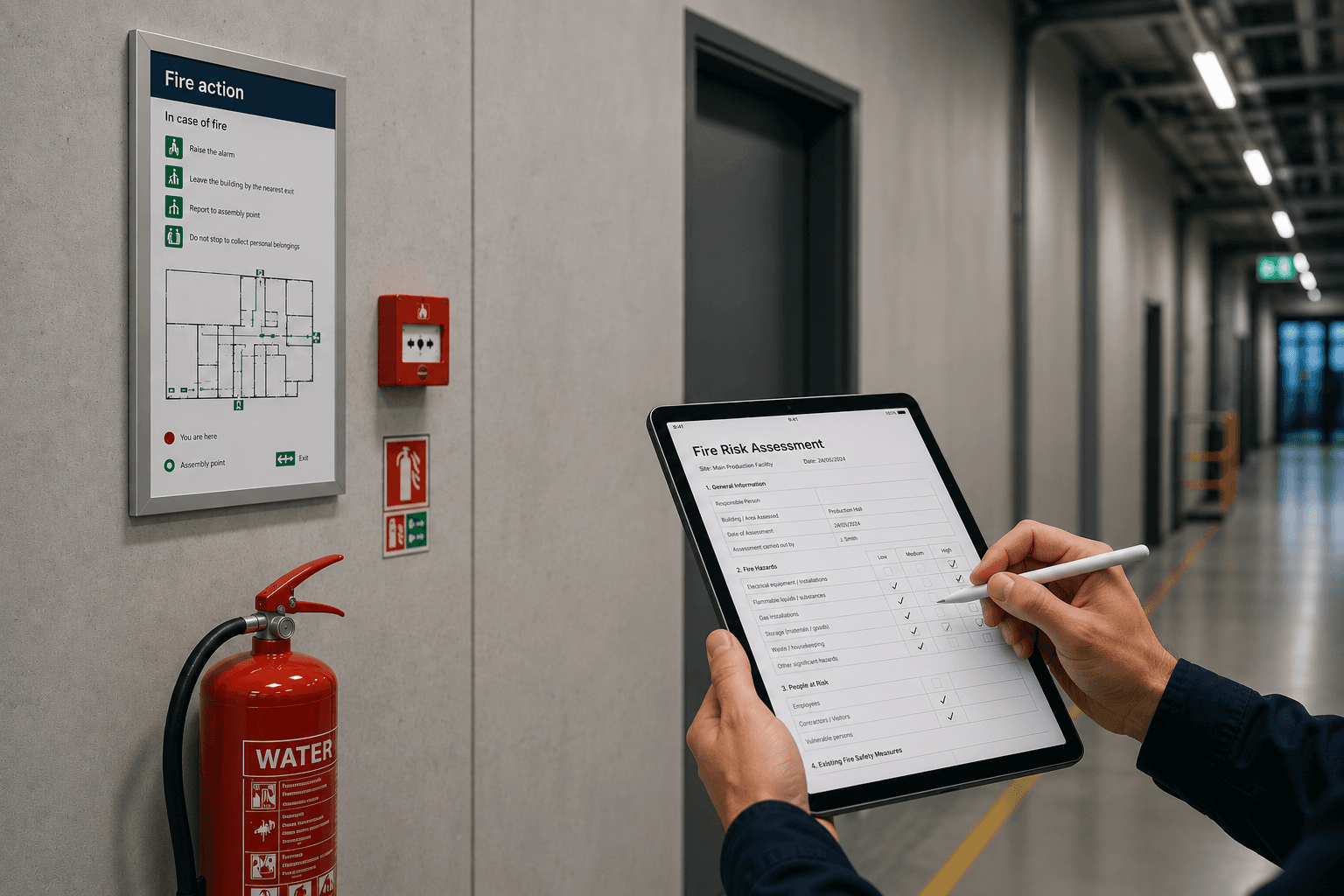
A suitable and sufficient assessment of fire risks — in writing where required — reviewed regularly and after material changes to the building or its use.
Include disabled occupants, lone workers, contractors and visitors — with suitable arrangements for safe evacuation.
Detection and warning, escape routes, emergency lighting, fire-fighting equipment, fire doors and compartmentation matched to the building's risk profile.
Planned servicing of fire alarms, emergency lighting, extinguishers, AOV systems and other safety equipment to the relevant British Standards.
Adequate fire safety training including evacuation procedures — refreshed periodically and recorded.
Suitable emergency procedures, fire warden roles where appropriate, and clear information for occupants about what to do in a fire.
Inspections, tests, training and incidents maintained in writing where required — with additional duties for higher-risk residential buildings.
Inspectors will ask for these. Insurers will ask for these. If something goes wrong, courts will ask for these. Keep them current, organised and accessible.
Enforcement is taken seriously. Fire and Rescue Authorities can issue Alteration Notices, Enforcement Notices and Prohibition Notices. Breaches can result in unlimited fines and, in the most serious cases, imprisonment. Insurance cover may be invalidated where fire safety duties have not been met.
The Building Safety Act 2022 has further increased penalties and oversight for higher-risk residential buildings — typically 18 metres or more in height, or seven or more storeys, containing two or more residential units.
Helix takes the complexity out of compliance. We help clients turn legal duties into practical, manageable actions — handling the things that should never be left to chance.
Review your current systems and identify priorities so nothing critical is missed.
Keep systems tested, serviced and operating as intended — to the right standards on the right schedule.
Maintain clear records that support accountability and compliance — ready for any inspection or audit.
If you are not certain where you stand, the first step is usually a survey. We will visit the property, review what is installed, check the condition of your existing records, and give you a clear, plain-English summary of where you are — including any immediate issues and longer-term priorities.
There is no obligation, no scare-tactics and no pushy upsell. Just a useful, honest review that puts you in a position to make informed decisions about your building.
Book a responsibilities review
Practical, no-obligation advice on fire, security and compliance for your building. Request a survey or speak to our team today.